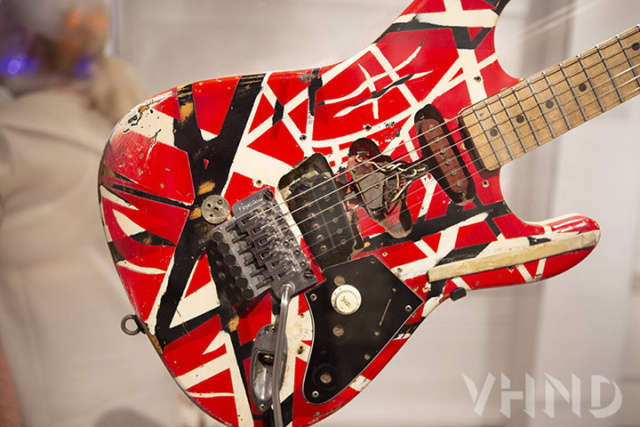
On International Artist Day, we celebrate one of rock’s most recognizable works of art, and the thousands of fans who have made it their own.
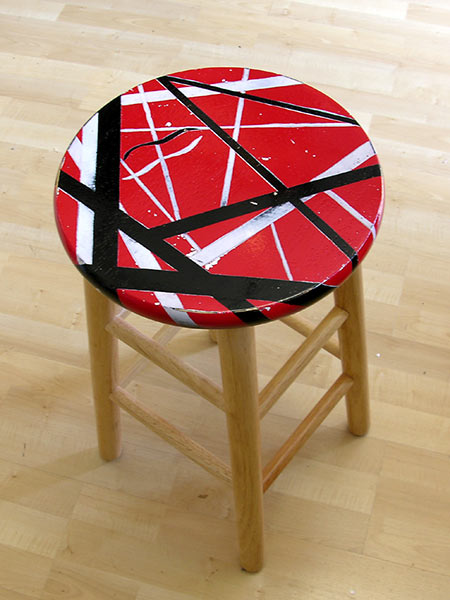
Some artists create paintings. Others create sculptures. Eddie Van Halen created something with a little masking tape, spray paint, and an electric guitar that would become one of the most recognizable images in rock ‘n’ roll history.
His stripes.
Red, white, and black. Jagged, intersecting lines, seemingly thrown together at random, yet instantly recognizable to millions of people around the world.
You don’t need to see Eddie’s name. You don’t need to see the Van Halen logo. You don’t even need to see a guitar.
Just those stripes.
And you know exactly what they represent.
There’s something particularly remarkable about Eddie Van Halen’s artwork: the extraordinary connection fans have with his iconic stripes. From guitars to clothing, collectibles, and beyond, his unmistakable visual style has become a lasting symbol of creativity, individuality, and rock ’n’ roll.

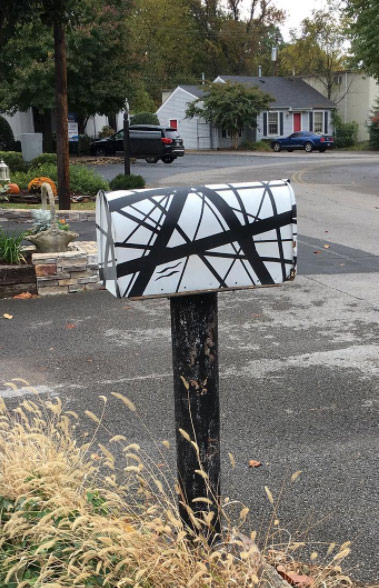
Nearly five decades after the world first saw his striped guitar, Eddie’s artwork has become a symbol of rock ‘n’ roll, individuality, creativity, and an entire lifestyle.
And it all started with one kid from Pasadena who wanted his guitar to look as different as his playing sounded.
A Guitar Unlike Any Other
When Eddie Van Halen assembled his legendary Frankenstein guitar in the 1970s, his goal was to build the ultimate instrument, one that suited his unique style of playing.
Eddie wanted the thick, powerful tone of a Gibson and the feel and playability of a Fender Stratocaster. Since no guitar manufacturer offered exactly what he wanted, he built one himself, combining parts and modifying the instrument to suit his needs.
And then he gave it a paint job unlike anything the guitar world had seen.
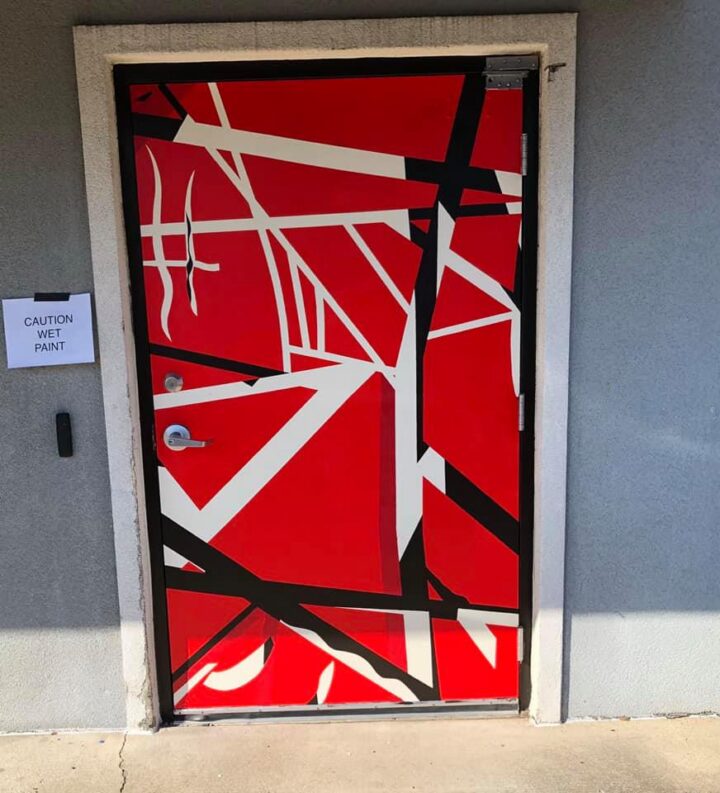
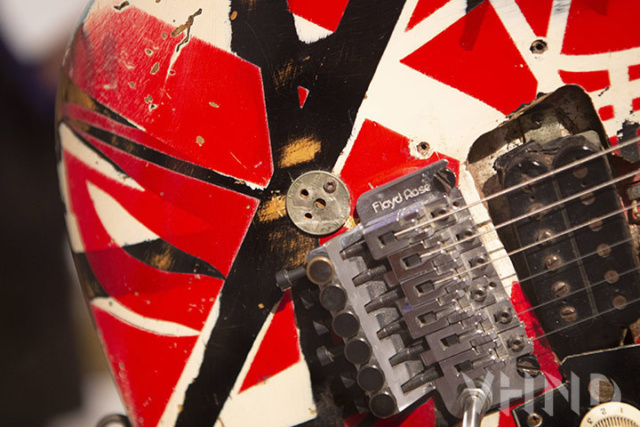
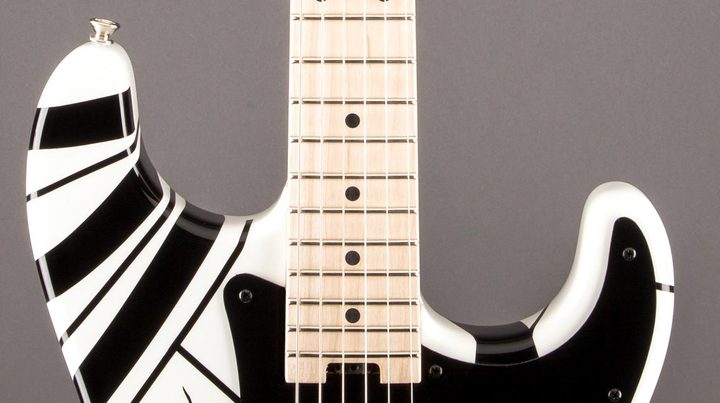
The original Frankenstein featured a black-and-white striped design, famously visible on the cover of Van Halen’s groundbreaking 1978 debut album. In 1979, Eddie added red paint, turning the instrument into the red, white, and black masterpiece that became his signature.
The design was wild, aggressive, unconventional, and completely original.
Just like Eddie’s playing.
The stripes seemed to visually capture the essence of his music: explosive and unpredictable, with lines shooting in every direction.
And that’s what made them so cool.
From Pasadena to the Art World
Where did Eddie get the idea?
In a 2022 article for AllMusic, titled “The Origin of the Striped Design of Eddie Van Halen’s Frankenstrat,” rock journalist Greg Prato explored several possible influences with noted Eddie Van Halen historian Brad Tolinski.
One intriguing possibility was the Dutch art movement known as De Stijl, which emphasized bold geometric shapes, straight lines, and primary colors. The movement included celebrated Dutch painter Piet Mondrian, whose abstract compositions bear an interesting resemblance to Eddie’s striped designs.

Eddie was born in the Netherlands and lived there until his family immigrated to America in 1962. Could those artistic influences have remained somewhere in his subconscious?
Another possibility was Southern California’s hot-rod culture, where customizing cars and creating unique paint jobs was a popular pastime. Tolinski also pointed to the Southern California punk scene, including guitarist Chip Kinman of the Dils, who decorated a white Les Paul with black electrical tape.
Whether any of these influences played a role remains speculative. Eddie’s own explanation was far less complicated: He simply thought the stripes looked cool.
Whatever inspired him, the result was unmistakably his own.
From the Stage to the Smithsonian
Eddie’s Frankenstein became a visual extension of the man himself, as recognizable to fans as his guitar playing and his famous grin.
Eventually, the art world took notice.
In 2019, Eddie’s original Frankenstein guitar was displayed at New York City’s Metropolitan Museum of Art as part of Play It Loud: Instruments of Rock & Roll, an exhibition organized with the Rock & Roll Hall of Fame.
The exhibition celebrated instruments that shaped rock music’s sound and visual identity, placing Eddie’s creation alongside legendary guitars associated with Jimi Hendrix, Eric Clapton, Jerry Garcia, and other musical innovators.

Years earlier, the Smithsonian’s National Museum of American History had acquired “Frank 2,” a replica of Eddie’s original Frankenstein guitar that he played extensively during Van Halen’s 2007-2008 reunion tour.
Announcing the acquisition in 2011, museum director Brent D. Glass explained:
“The museum collects objects that are multidimensional, and this guitar reflects innovation, talent and influence.”
A guitar Eddie originally assembled and painted himself, using his own imagination and ingenuity, had become important enough to be celebrated by two of America’s most prestigious museums.
Quite an achievement for a homemade guitar that began as an experiment in Eddie’s quest for the perfect sound.
The Stripes That Took Over the World
Rock music has produced some of the most recognizable visual symbols in popular culture.
The Rolling Stones have their famous tongue-and-lips logo. KISS has its unmistakable makeup and costumes. Led Zeppelin has the mysterious symbols from its fourth album. The Grateful Dead have their dancing bears, skulls, and lightning bolts.
Eddie Van Halen’s stripes are in that company.
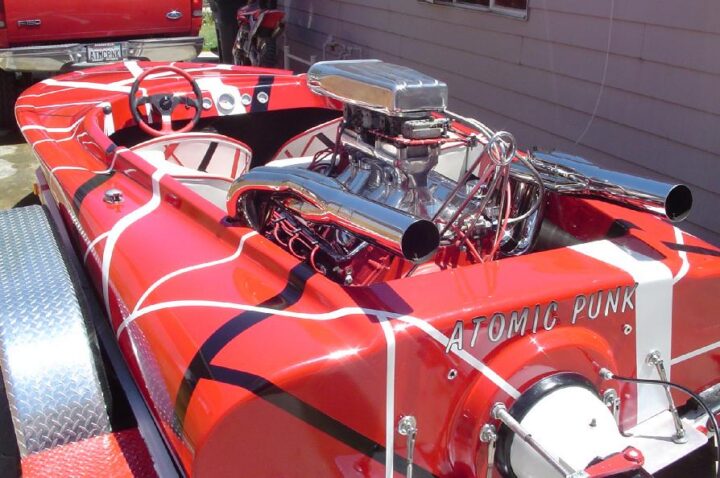
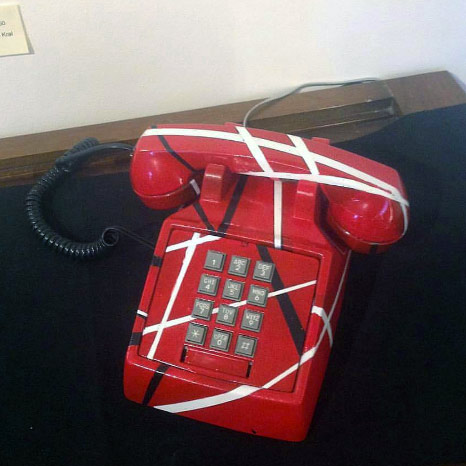
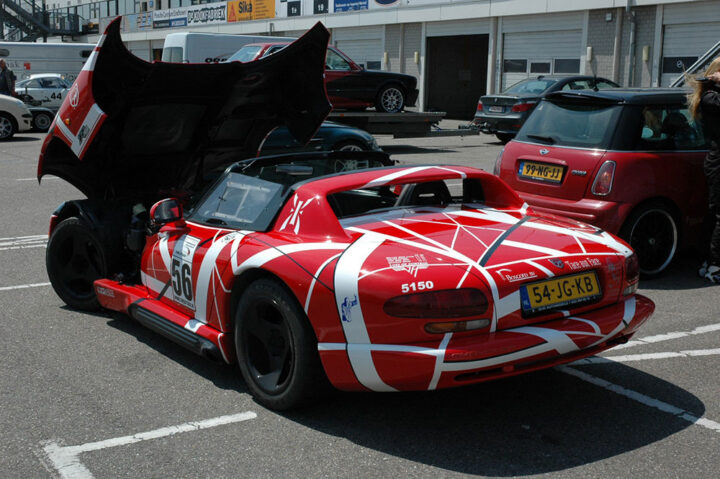
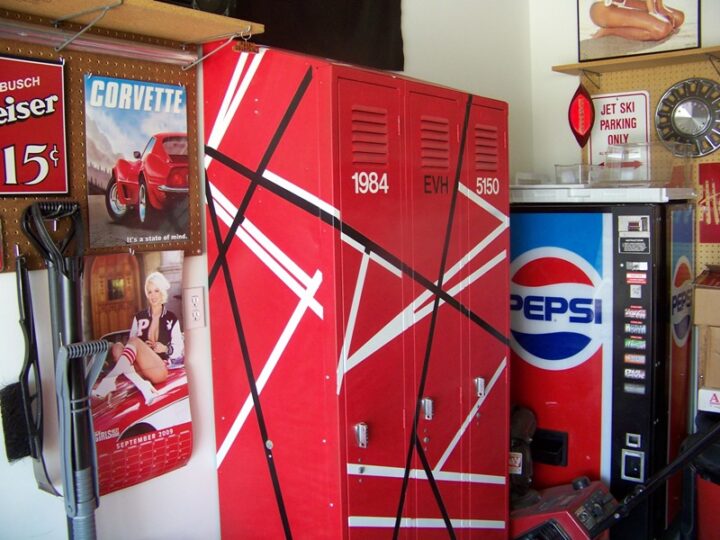
One particularly fascinating aspect of Eddie’s design is how far its influence has spread beyond the guitar world.
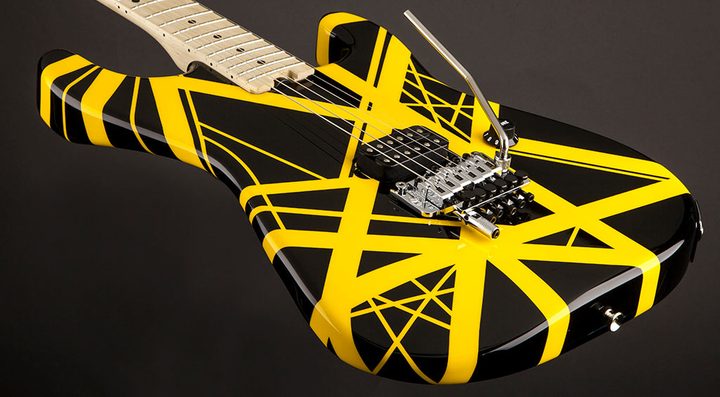
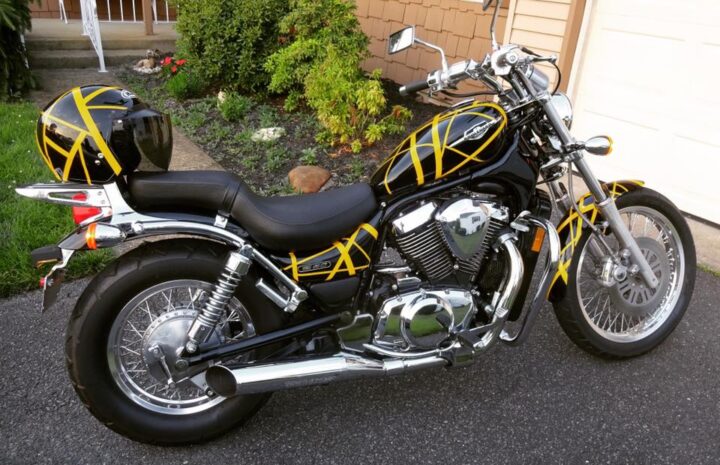
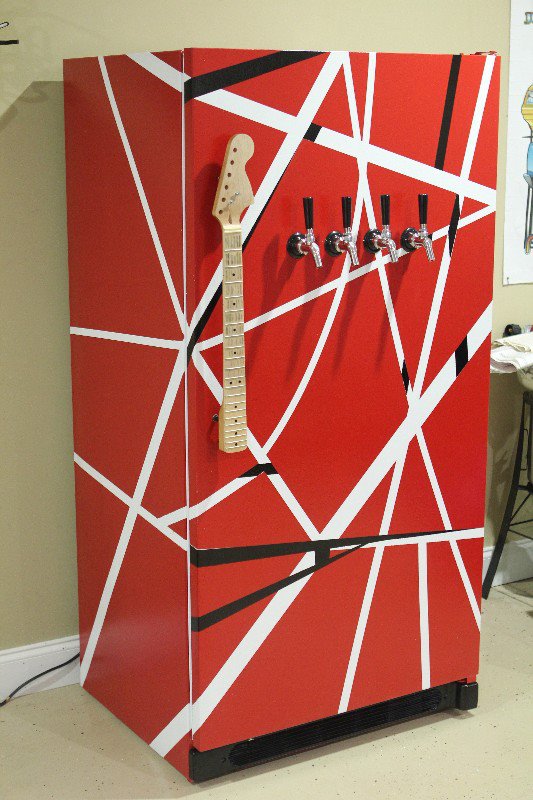
And we’re talking about a whole lot more than guitars.
Cars. Trucks. Jeeps. Motorcycles. Bicycles. Refrigerators. Coolers. Toolboxes. Furniture. Shoes. Helmets. Staplers. You name it.
The sheer variety of objects bearing Eddie’s unmistakable stripes shows just how deeply his artwork has become embedded in rock ‘n’ roll culture.
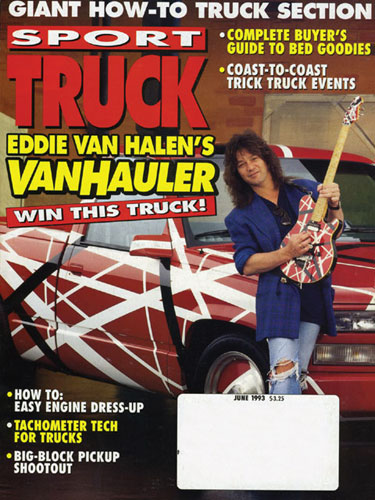
Eddie even got in on the action himself. In the early 1990s, he collaborated with legendary hot-rod builder Boyd Coddington on customized Chevrolet trucks featuring his signature striped design.

More Than a Logo
Over the decades, Eddie’s stripes have appeared on a huge variety of officially licensed merchandise, including T-shirts, hats, shoes, slip-ons, beach towels, board shorts, guitar picks, and more. You can find a wide selection at the official EVH online store, Van Halen Store.
For Van Halen fans, the design has become a way to show their appreciation for Eddie and their connection to the music.
There’s a wonderful irony in all of this.
Eddie was a fiercely individualistic musician who created his guitar because he wanted something unique. Yet the design he created became so recognizable that millions of fans around the world now associate those stripes with the man, his music, and everything Van Halen represents.
What began as one musician’s personal expression became an enduring part of rock ‘n’ roll’s visual identity.
The Art of Being Eddie
Eddie Van Halen changed the way the electric guitar was played. His innovations in technique, tone, and instrument design influenced generations of musicians.
He also changed what a rock guitar could look like.
The Frankenstein’s stripes became as instantly identifiable as his two-handed tapping, his unmistakable guitar tone, and that famous grin.
Few musicians have ever created such a powerful connection between their sound, their instrument, and their visual identity.
Perhaps the greatest testament to Eddie’s artistic achievement is that his stripes have become inseparable from his identity. Those jagged lines are recognized around the world, even by people who have never picked up a guitar.
Nearly half a century after those first black-and-white stripes appeared on an album cover, Eddie’s design remains a powerful symbol of individuality, innovation, and rock ‘n’ roll.
When Eddie first painted his guitar, he could hardly have imagined the worldwide phenomenon his design would become.
Nearly 50 years later, his stripes remain one of rock ‘n’ roll’s most recognizable and beloved works of art.
Happy International Artist Day, Edward.
Your masterpiece is everywhere.
What does Eddie Van Halen’s iconic striped design mean to you? Do you remember the first time you saw his Frankenstein guitar? Share your memories in the comments.

It’s not just art. It’s playable art.
For decades, Van Halen Store has offered miniature replica guitars, collectibles, and genuine EVH guitar accessories. Now, they offer the full line of EVH Striped Series guitars! The real deal: genuine, full-size electric guitars ready to play, or proudly display as a rockin’ centerpiece in your home, office, or man cave. Available at Van Halen Store.